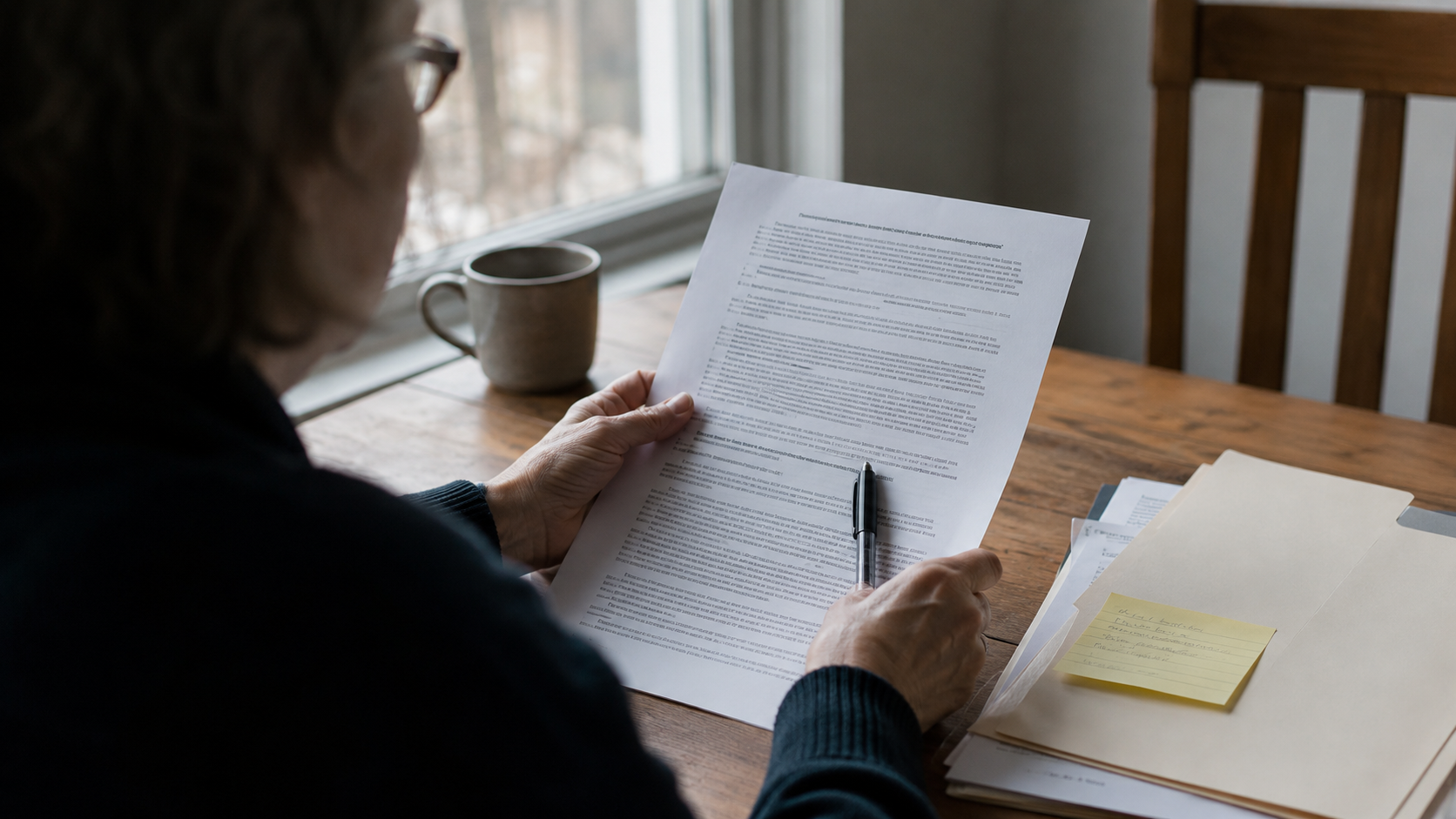
Grant seeking has a brutal asymmetry: a serious proposal can take dozens of staff hours, and most applications lose. The highest-leverage skill in grant work isn't writing — it's deciding which applications not to start. That decision happens when you read the RFP (request for proposals), and most organizations read them wrong: they scan for the dollar amount and the deadline, feel a jolt of hope, and start drafting.
Read in three passes
Pass one: the knockout factors (5 minutes)
Look only for reasons to say no. Geography: does the funder restrict to specific states or communities you don't serve? Applicant type: do they require current 501(c)(3) status, a fiscal sponsor, or a minimum operating history? Budget range: is your organization's size wildly outside their typical grantee profile? Use of funds: many funders exclude general operating support, salaries, or anything that isn't a discrete program. If any knockout applies, stop. No amount of good writing overcomes an eligibility mismatch.
Pass two: the fit test (10 minutes)
Now read what the funder says it wants to change in the world: the priorities section, not the logistics. The question is not "could our work be described in these terms?" It's "is this what we already do?" Funders read hundreds of proposals; stretched framing is transparent to them. A useful test: write one sentence connecting your existing program to their stated priority. If the sentence needs the word "also" or "additionally," you're stretching.
Pass three: the economics (15 minutes)
Estimate the real cost of applying: staff hours to write, gather attachments, get board sign-offs, and, if you win, comply with reporting requirements. Weigh it against the award size multiplied by your honest odds. A rough rule many development professionals use: if the expected value doesn't cover at least three times the cost of applying, the RFP needs a strategic reason (like starting a relationship with a funder you want for the long term) to justify the effort.
Signals worth extra weight
- A named program officer you can contact. Funders who take questions before deadlines tend to run fairer processes, and the conversation itself is intelligence.
- Published lists of past grantees. Ten minutes on who they actually funded beats an hour parsing their prose. If every past grantee is ten times your size, believe the pattern.
- Renewal language. Funders that describe multi-year relationships are worth more per application hour than one-shot awards.
The takeaway
Treat every RFP as a qualification problem before it's a writing problem. Three passes (knockouts, fit, economics) take about half an hour and will kill most opportunities on your list. That's the point. The applications that survive get your full effort, your real odds go up, and your team stops resenting the grant calendar.