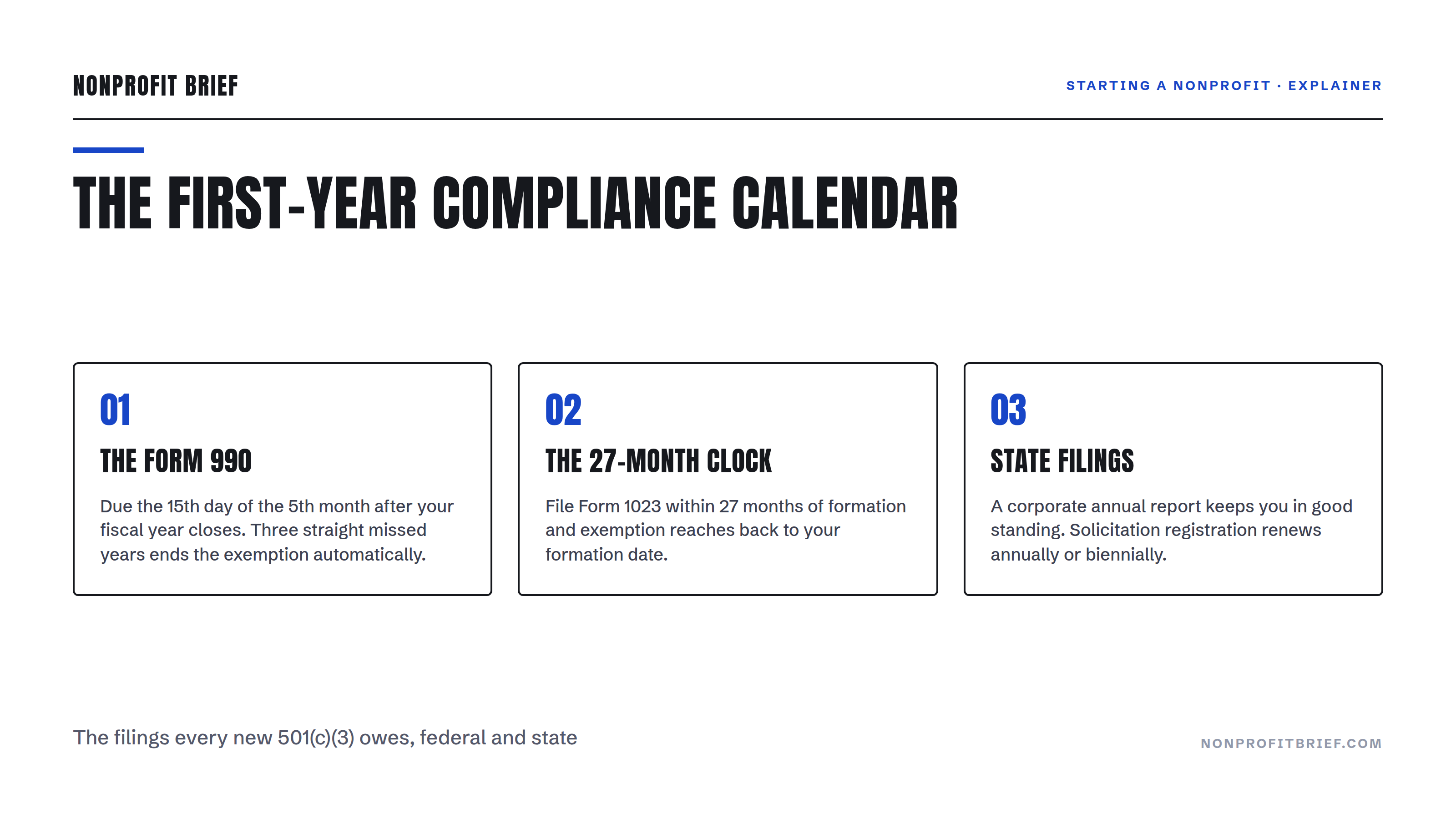
The IRS determination letter feels like a finish line. It works more like a starting gun. A new 501(c)(3) picks up a set of recurring deadlines the day it is formed, and most of the organizations that lose their exempt status lose it not to scandal but to missed paperwork. The fix is unglamorous: put four dates on a calendar now, in year one, before programs crowd them out.
The Annual Return Is Due Even in a Year You Raised Nothing
Nearly every 501(c)(3) must file an annual return in the Form 990 series. Churches, their integrated auxiliaries, and a short list of other categories, such as organizations covered by a parent's group return, are exempt from the requirement. Almost everyone else files, including brand-new organizations with no revenue yet.
Which form depends on size. If your annual gross receipts are normally $50,000 or less, you file Form 990-N, an electronic postcard asking for 8 items of basic information. "Normally" is a term of art that favors new organizations: in your first tax year you qualify if you received, or donors pledged, $75,000 or less, and the test becomes a multi-year average as the organization ages. One structural exception: supporting organizations under section 509(a)(3) cannot use the 990-N even when small. If gross receipts are under $200,000 and total assets are under $500,000, you may file the shorter Form 990-EZ. At or above either threshold, you file the full Form 990. Private foundations file Form 990-PF regardless of size.
The due date is the 15th day of the 5th month after your fiscal year closes. For a calendar-year organization, that is May 15. If you need more time for a Form 990 or 990-EZ, Form 8868 buys an automatic 6-month extension. The 990-N cannot be extended, though there is no monetary penalty for submitting it late.
The reason this deadline leads the calendar: miss the filing 3 years in a row and your exemption is automatically revoked, effective on the original due date of the third missed return. The IRS cannot undo a proper automatic revocation; getting the exemption back means applying again. There are reinstatement paths, including a streamlined retroactive one for small filers who apply within 15 months, but none of them are as cheap as filing the postcard on time. Donors keep the deduction for gifts made before your name appears on the IRS auto-revocation list; after that, deductibility stops until you are reinstated.
The 27-Month Clock on Retroactive Exemption
Plenty of new nonprofits incorporate first and plan to file the exemption application later. That is allowed, but the grace period has an edge. File Form 1023 within 27 months of the end of the month you were formed and, if approved, your exemption reaches back to your formation date. File later and exemption generally runs only from the filing date forward, which can strand the deductibility of gifts your early supporters already made. A late filer can request an earlier effective date on Schedule E of the full Form 1023, but relief is not guaranteed, and the streamlined Form 1023-EZ has no equivalent: a late 1023-EZ filer who wants retroactivity must switch to the long form.
If you have not yet chosen between the long and short application, start with our guide to Form 1023 versus 1023-EZ. Then work backward from your own 27-month date.
Your State Wants Two Separate Filings
The IRS is only half the calendar. Your state typically wants two different things, from two different offices, and confusing them is a classic first-year mistake.
The first is the corporate annual report, filed with the secretary of state or equivalent office. It is usually short and cheap, and it keeps your legal entity in good standing. Ignore it long enough and many states will administratively dissolve the corporation, which unwinds far more than the filing fee was worth.
The second is charitable solicitation registration, generally with the attorney general or a charities bureau. Roughly 40 states require charities to register before asking their residents for donations, and registrations renew annually or biennially depending on the state. The rules, thresholds, and exemptions vary widely by state, so check the ones where you actually fundraise. Our primer on registering to fundraise covers how the system works and where new organizations trip.
Depending on your state, you may also need to apply separately for state income, sales, or property tax exemptions. Federal recognition does not always confer them automatically.
Keep the Records the Public Can Ask For
Federal law gives the public inspection rights over two sets of documents: your exemption application, including Form 1023 and its attachments, and your three most recent annual returns. Keep clean copies where a staff member can produce them on request.
Board minutes are not public, but they are the record that proves your board is doing its job. Keep them consistently from meeting one, along with a signed conflict-of-interest policy. If your board is new to the role, the three legal duties every member takes on are a short read and worth circulating.
The Takeaway
Four dates cover most of a new nonprofit's compliance life: the 990 due date, the 27-month Form 1023 deadline if you have not yet applied, the state corporate report, and the solicitation registration renewal. None of this requires a lawyer for a small organization. It requires a shared calendar, a named owner for each date, and 5 minutes at every board meeting confirming nothing has slipped. Deadlines and thresholds here are the federal defaults as of August 2026; your state's dates are your own homework.